
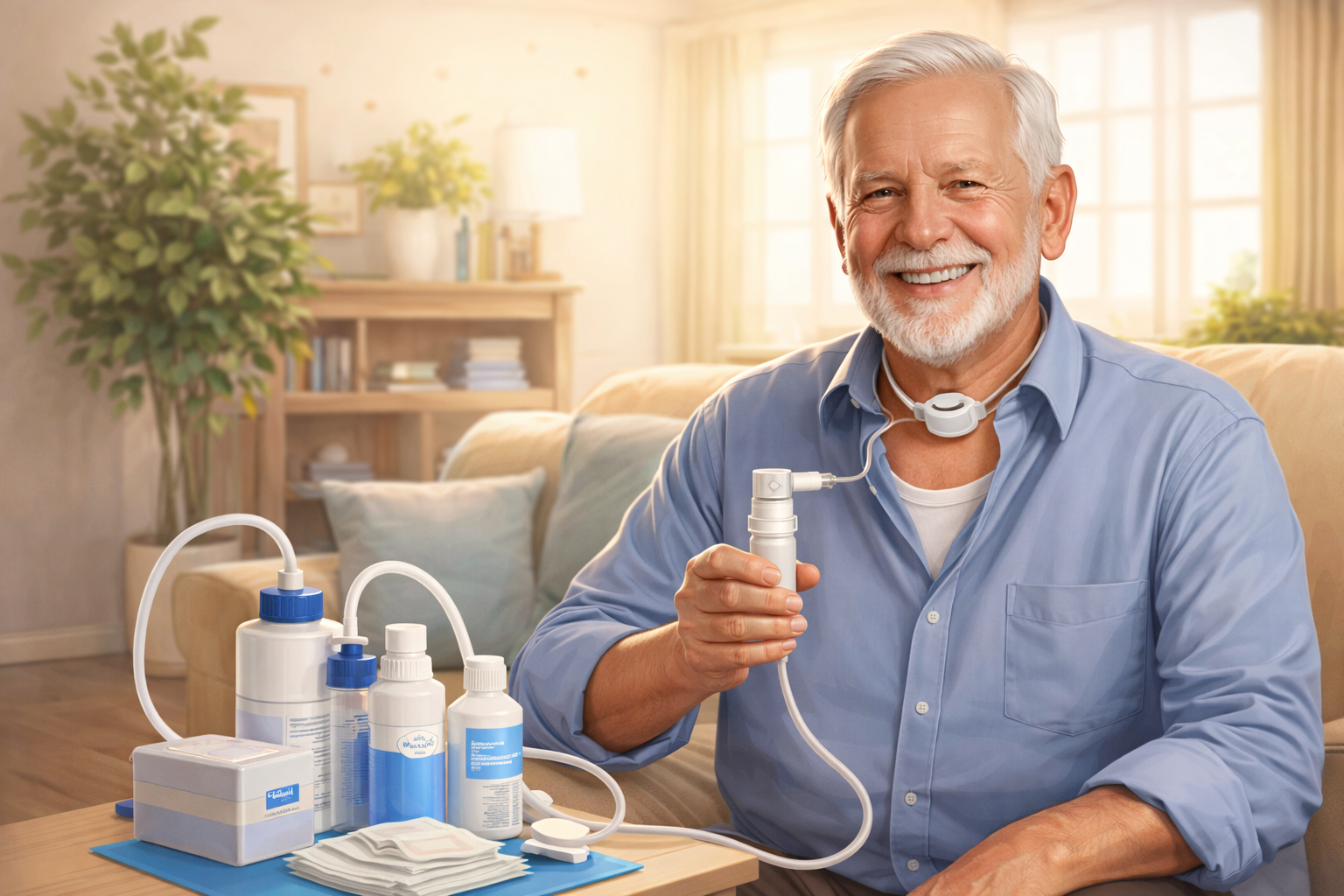
What Is a Tracheostomy?
A tracheostomy is a small opening made in the neck. Through this opening, a tube is placed into the windpipe to help with breathing. Doctors may suggest a tracheostomy if someone cannot breathe well on their own. For example, it may help after an injury, surgery, or long illness. With proper tracheostomy care at home, many people can breathe easier and stay healthy.
Why Is Tracheostomy Care Important at Home?
Proper home tracheostomy management is very important. First, it keeps the tube clean and open. This helps prevent infections and blockages. Also, good care helps your loved one feel more comfortable. Because the tube is a direct path to the lungs, germs can enter easily. So, regular cleaning and care lower the risk of problems. According to the CDC, careful home care can prevent many tracheostomy complications.
Essential Supplies for Tracheostomy Care
Before you begin, gather all needed supplies. Having everything ready makes care easier and safer. Here are the basic items you will need:
Additionally, keep emergency supplies nearby, such as an extra tube and scissors.
Step-by-Step Tracheostomy Care Instructions
Follow these steps for safe tracheostomy care at home:
For suctioning, follow your doctor’s instructions. Always use a clean catheter and stop if your loved one coughs or has trouble breathing.
Recognizing and Managing Common Complications
Even with good care, problems can happen. However, knowing the signs helps you act quickly. Watch for these common issues:
If you notice any of these, clean the area and check the tube. But if symptoms do not improve, call your healthcare provider right away. Quick action can prevent serious problems.
Tips for Daily Living and Comfort
Living with a tracheostomy can feel new at first. Yet, with simple steps, daily life can be safe and comfortable. Here are some helpful tips:
With practice, both patients and caregivers can feel more confident each day.
When to Seek Medical Help
Sometimes, problems need quick medical attention. Seek help right away if you notice:
Do not wait if you are unsure. It is always better to ask your doctor or visit the hospital.
Prevention and Safety Measures
Prevention is key for safe home tracheostomy management. Follow these safety steps every day:
With these tracheostomy safety tips for families, you can lower risks and help your loved one stay healthy. Sparsh Senior Care offers helpful guides on tracheostomy care at home.
Consult a healthcare professional at Sparsh Senior Care for personalized tracheostomy care guidance.